
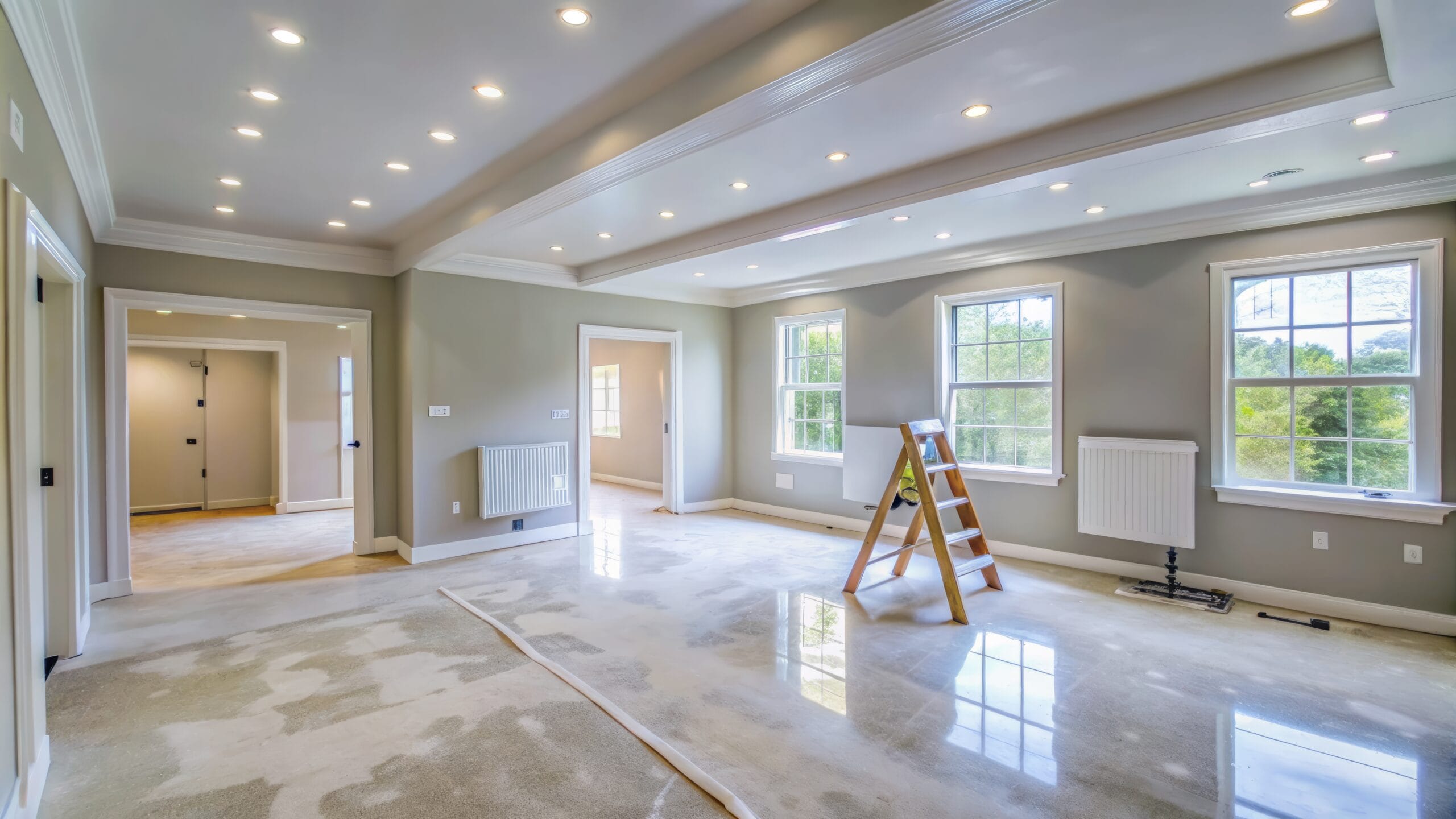
You've patched the holes, sanded the walls, and applied a fresh coat of paint. Everything looked good before the paint went on—but now every seam, patch, and imperfection seems to jump out at you.
If you've ever experienced this, you're not alone. Drywall finishing is one of the most challenging parts of any renovation because paint highlights even the smallest flaws. Here's why DIY drywall projects often become more noticeable after painting and how professionals achieve smooth, seamless results.
Paint Reveals Every Imperfection
Before painting, unfinished drywall has a dull, uniform appearance that can hide minor bumps, ridges, and sanding marks. Once primer and paint are applied—especially in rooms with natural light or bright overhead lighting—those imperfections become much more visible. Even tiny variations in the wall's surface can cast shadows that make joints, patches, and repairs stand out.
Uneven Joint Compound Application
One of the most common DIY mistakes is applying too much or too little joint compound. Too much compound creates raised seams, and too little compound leaves visible depressions around joints. Professional finishers apply multiple thin coats of compound, feathering each layer wider than the last to create a gradual, seamless transition between the drywall and the finished surface.
Inadequate Sanding
Sanding is more than just making the wall smooth to the touch– it’s about creating a perfectly flat surface. Professionals use specialized sanding tools, lighting, and years of experience to identify imperfections before the primer is even applied. Some common DIY mistakes include:
- Missing dried drips of tool marks
- Oversanding and exposing drywall tape
- Creating uneven low spots
- Leaving ridges around seams
Poor Drywall Tape Installation
Drywall tape is designed to reinforce the joints between drywall panels, helping create a smooth, durable surface that resists cracking over time. However, if the tape is installed incorrectly, imperfections often become noticeable once the walls are primed and painted. Common issues caused by improper tape installation include:
- Visible seams
- Air bubbles
- Loose tape
- Cracks developing along the joints
These problems can detract from the finished appearance and may require additional repairs.
Skipping Primer
Primer plays a crucial role in achieving a professional looking paint finish. Fresh drywall compound is much more porous than the surrounding or bare drywall, so it absorbs paint at a different rate. If primer is skipped, repaired areas may appear dull, shiny, or slightly different in color and sheen–even after multiple coats of paint. A quality primer seals the surface so that the finished coat has a consistent appearance.
Lighting Makes a Huge Difference
A wall that looks smooth under dim lighting can reveal every imperfection once it's exposed to bright natural light or overhead fixtures. Sunlight streaming through nearby windows and recessed lighting can highlight subtle ridges, sanding marks, and uneven seams that might otherwise go unnoticed.
These imperfections are especially noticeable in:
- Large living rooms
- Hallways
- Open floor plans
- Kitchens
- Rooms with recessed lighting
That's why professional drywall finishers inspect walls using bright work lights before applying primer and paint. Viewing the surface under intense lighting helps identify and correct even the smallest imperfections, ensuring the finished walls look smooth and flawless in any lighting condition.
Experience is Key
Painting is often the moment when hidden drywall imperfections become impossible to ignore. While DIY drywall projects can save money upfront, correcting visible seams, uneven patches, and poor finishes after painting can be more time-consuming and costly than getting it right the first time.Whether you're repairing a single room or finishing an entire home, quality drywall work creates the smooth foundation that every beautiful paint job depends on.
If you're planning a renovation or need drywall repairs, working with an experienced drywall contractor can help ensure your finished walls look clean, smooth, and ready to enjoy for years to come.
0 Comments