
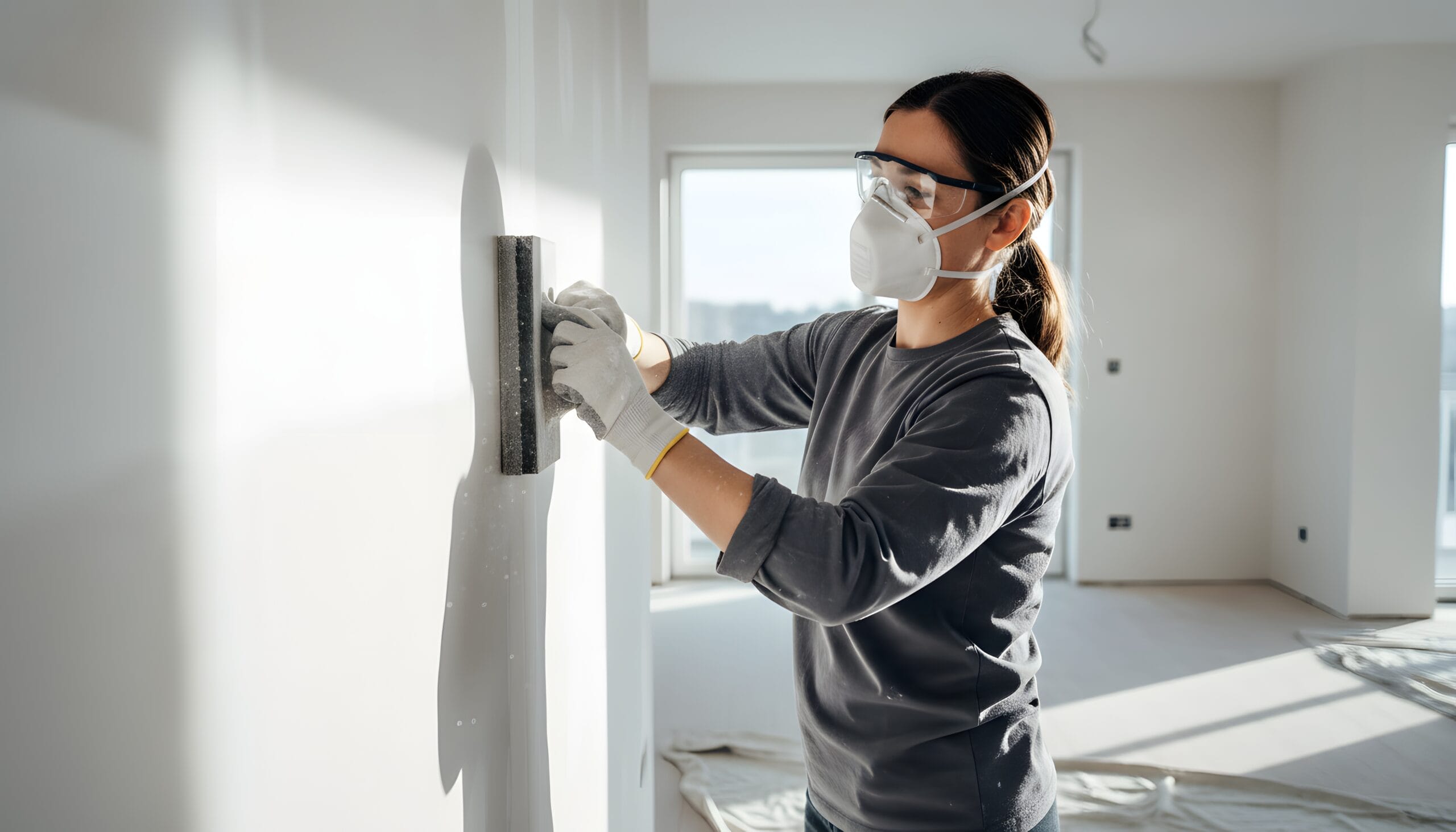
If you want to control drywall dust during a renovation, you need a plan before the first cut is made. When you have drywall work done in your home, you probably understand the problem: although the actual work occurs within an isolated space, the dust somehow manages to cover almost every square inch of the entire house. The dust gets on your floors, accumulates on your furniture, travels down hallways and, amazingly enough, finds its way into spaces that do not appear to be connected to the original drywall renovation.
The reason for this issue lies in how easily drywall dust can travel throughout a home. For this reason alone, controlling it must begin long before the first application of the sandpaper.
It Starts With a Plan
You cannot develop a strategy for controlling dust as the project is ongoing. Before starting work on the area to be renovated, an assessment will determine what rooms will be impacted by the renovation and identify the entry and exit points. This same assessment will also establish the most effective method(s) to isolate the area to be renovated from the balance of the home. Taking a few minutes prior to commencing work to assess and plan the area to be renovated can greatly affect results once sanding has begun.
Create a Barrier
One of the most basic and efficient methods to contain drywall dust is to isolate the area where drywall is being sanded from the remainder of the home. Plastic sheeting can provide temporary isolation zones surrounding the area under renovation. Depending on the scope of the project, doors, openings, etc., may require additional protection to minimize opportunities for airborne dust migration into adjacent areas.
Don’t Let the HVAC Spread It
Your home's HVAC system circulates air throughout your home - which is wonderful for heat and cold comfort. However, it does not serve you well when that circulated air carries drywall dust. When performing work requiring drywall sanding, the planning process must include consideration of your HVAC systems. Systems may need to be deactivated during periods when significant amounts of dusty work are occurring, and ventilation system registers, or grills located in or proximal to the work area should be sealed/protected so as to preclude drywall dust from entering ductwork and subsequently circulating throughout your home.
Although often overlooked, finding unexpected areas containing large amounts of drywall dust is typical when failing to consider this detail.
Use Materials That Control Drywall Dust
The choice of products used during drywall finishing will also significantly contribute to minimizing your exposure to drywall dust. Dust-controlling joint compounds are formulated to produce coarser particle sizes during sanding than many standard joint compounds. Some dust-control formulas, like National Gypsum's ProForm Dust-Tech line, can reduce airborne dust during sanding by up to 60% compared to standard compounds. As a result, these finer particles are much easier to handle than the finer airborne particles generated during sanding using less dust-controlled joint compounds.
Selecting a dust-controlling joint compound will assist in reducing your exposure to dust generated during sanding operations, but complete elimination of all dust associated with sanding operations is unlikely.
A Cleaner Job Starts Before the First Sand
Good drywall work consists of obtaining a quality finish on your walls. Also, equally important is to protect the surrounding environment from damage due to the construction activities. Planning for the working area, providing physical separation using plastic sheeting to isolate the working area from remaining portions of your home, effectively managing/sealing your home's HVAC & ventilation register locations, and choosing suitable dust-controlling joint compounds can all support keeping the debris confined to the specific areas where the construction occurred.
In short, after a professional contractor completes their task of installing new drywall in your home, you should observe a completed and beautiful wall, not a thick blanket of white dust coating every surface in your home.
0 Comments