
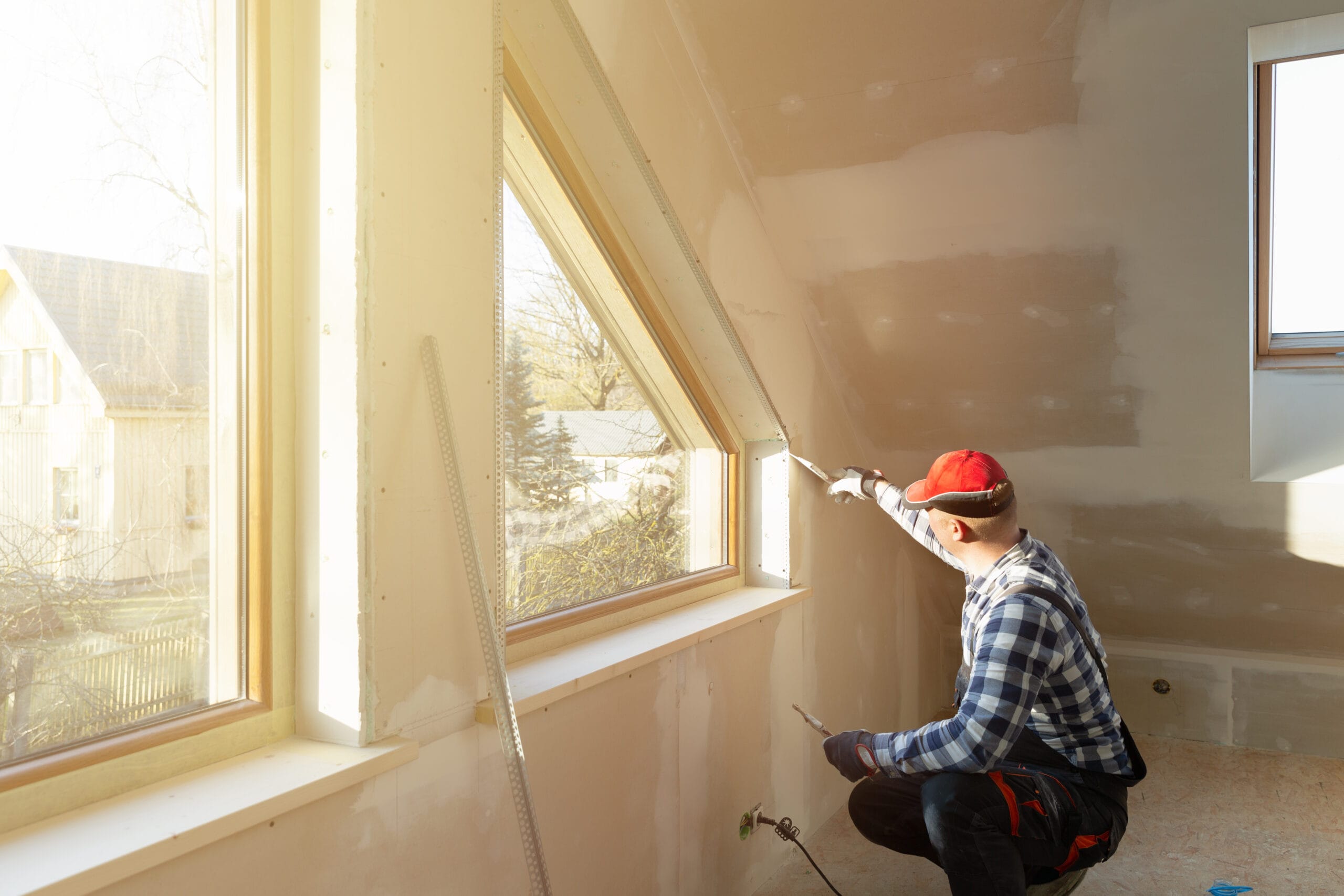
When homeowners think about making their home more energy efficient, the typical focus is on weatherstripping, doors and windows, appliance upgrades, or HVAC systems. However, Drywall also plays a critical role in creating a more energy efficient home. As a key component of your ceilings and walls, drywall creates a barrier that reduces heat transfer, limits air leaks, and supports your homes insulation system.
Reducing Air Leaks
One of the biggest causes of energy loss in a home is uncontrolled air leakage. Small gaps and cracks in walls allows for conditioned air to escape and outdoor air to get in. A good quality drywall installation with properly sealed and finished drywall joints will minimize these leaks. When your drywall is maintained, it leads to better HVAC performance and reduced heating and cooling costs.
Supports Insulation Performance
Insulation works best when it is paired with properly finished drywall. Insulation alone does not fully prevent air movement through wall cavities. The drywall acts as a protective layer that keeps the insulation in place and enhances its effectiveness. Together, insulation and drywall create a more complete thermal barrier that slows heat transfer between indoor and outdoor environments.
Improved Temperature Stability
A well-installed drywall system helps reduce temperature fluctuations throughout the home. Limiting drafts and supporting insulation help maintain consistent room temperatures, which means that your heating and cooling system doesn’t have to work as hard to compensate for temperature changes. This directly results in lower energy usage and increased comfort.
Contributes to Sound and Moisture Control
Energy efficiency is more than just temperature regulation. Drywall can also help improve moisture control and sound insulation. Moisture-resistant drywall products can help reduce humidity-related issues that may affect insulation performance. Additionally, sound-dampening drywall can create a quieter indoor environment while maintaining the integrity of the walls.
Professional Installation Matters
Even the highest quality drywall won’t provide any of these optimal energy-saving benefits if poorly installed. Professional contractors will ensure:
● Proper fighting and fastening
● Effective air sealing
● Tight seams and joints
● Compliance with building codes
Drywall is often overlooked as an energy-efficient feature, but it plays a crucial role in maintaining a cost-effective home. Professional installation and drywall repair is often a part of larger renovation projects aimed at improving insulation and reducing air leakage. Don’t underestimate the value of including properly installed drywall on your checklist for creating a more energy-efficient home.
0 Comments