
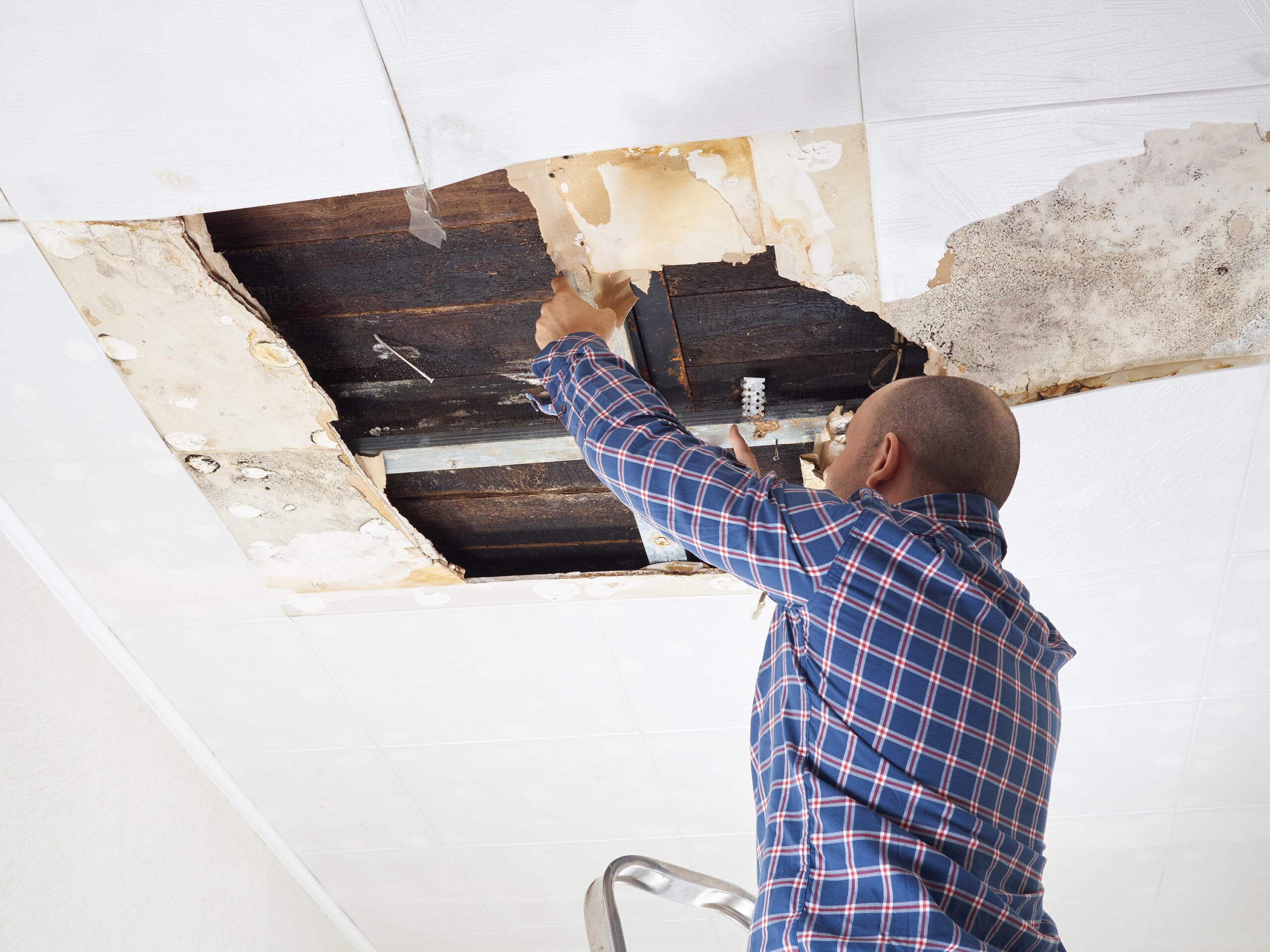
Water Damage? What’s next?
Discovering water damage in your home can be stressful. Whatever the cause is, acting quickly can minimize repairs and help prevent long-term issues like mold and structural deterioration. One of the most commonly affected materials is drywall. While it may look like only a cosmetic issue, water-damaged drywall often requires more than just a fresh coat of paint.
Here’s what you should do after discovering water damage.
Stop the Source of Water
Before repairs start, the cause of the water intrusion needs to be identified and corrected. Repairing drywall without fixing the source delays the problem. Common causes include:
- Roof leaks
- Bursting or leaking plumbing
- Appliance failures
- HVAC condensation issues
- Foundation seepage
Assess the Damage
Not all water damage is easily visible. Moisture meters are often used to determine how far the water has traveled behind finished surfaces. A professional inspection typically includes checking:
- Drywall
- Insulation
- Wood framing
- Flooring
- Ceiling cavities
- Adjacent rooms
Dry the Area Immediately
The drying process should begin as soon as possible. The goal is to remove moisture before mold has an opportunity to grow. Depending on the severity, this may include:
- Air movers
- Commercial dehumidifiers
- Ventilation
- Moisture monitoring
Inspect the Drywall
Drywall doesn't always need to be replaced–but it should be carefully evaluated. It may be salvageable if water exposure was brief, the drywall remains solid, and moisture readings return to acceptable levels. Replacement is usually recommended when the drywall is soft or swollen, sagging, delaminating, molding, or has been saturated for an extended period. When in doubt, replacing a section of drywall is often safer than trying to home repair compromised material.
Check What’s Behind the Wall
One of the biggest mistakes a homeowner can make is repairing only what they can see. Getting a professional inspection of what is behind the damaged drywall can help prevent recurring problems later. Always inspect the following:
- Wet insulation
- Wood framing
- Electrical wiring
- Plumbing
- Signs of mold or mildew
Replace Damaged Materials
After everything has dried completely, reconstruction can begin. This could include replacing any framing, insulation, electrical, or plumbing before new drywall installation can even begin. A good contractor will be able to paint and texture match your existing walls to make a repair that blends seamlessly with the surrounding walls and ceiling.
Prevent Future Damage
Routine maintenance is the key to preventing unexpected repairs. HVAC maintenance, annual roof inspections, cleaning gutters and downspouts regularly, and monitoring basements and crawlspaces for moisture are all good practices for preventing future water damage.
The Bottom Line
Water damage is more than a cosmetic issue. While stained or damaged drywall is often the first thing homeowners notice, the real concern is what’s happening behind the walls. Hidden moisture can lead to mold growth, damaged insulation, weakened framing, and recurring repairs if it isn’t addressed properly. The key is to not rush the repair process. Taking these steps not only restores your home’s appearance but also helps protect its long-term value and integrity.
0 Comments