
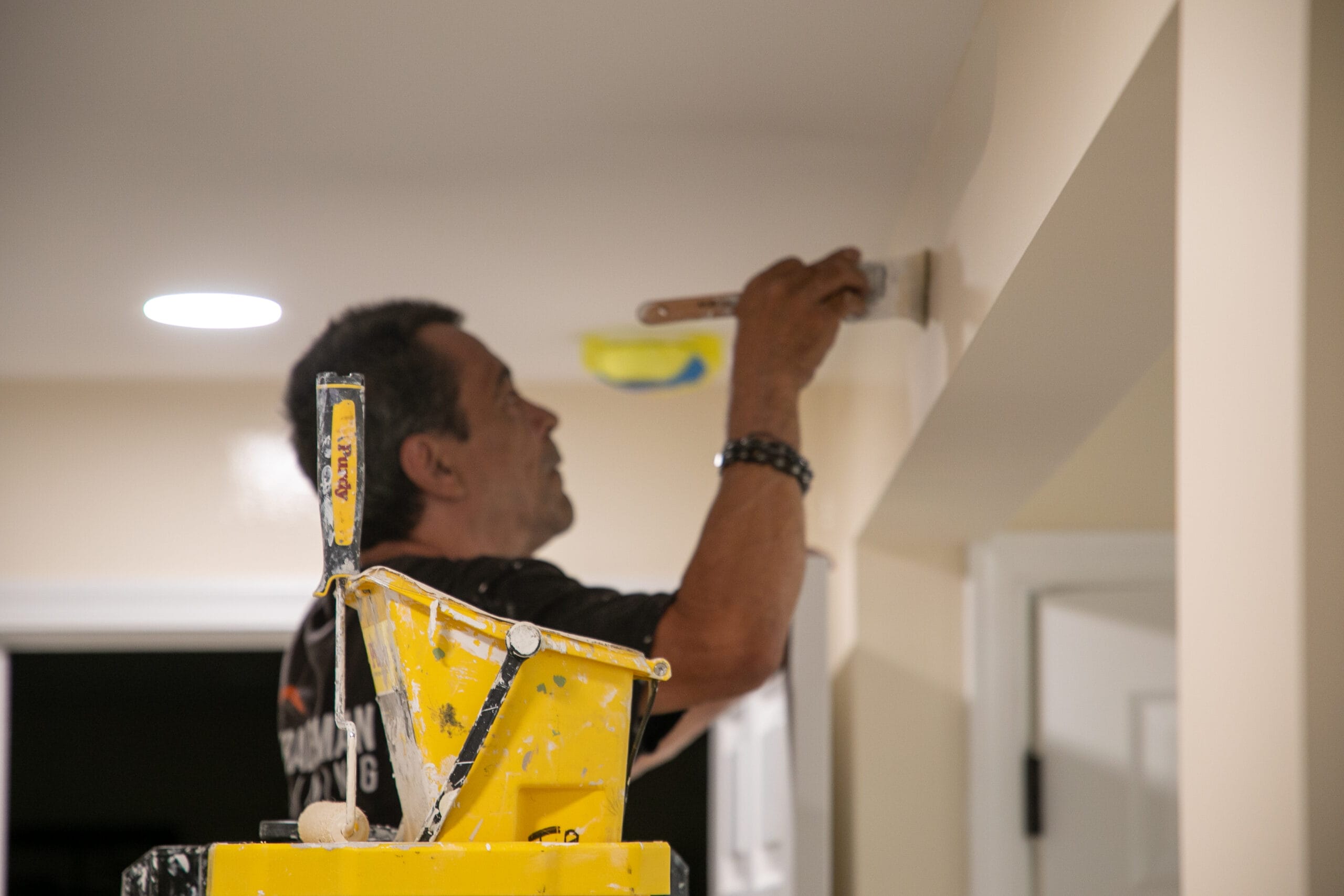
Drywall holes or dents don’t always require repainting the whole wall - in many cases, you can repair drywall with a simple spot fix. Most likely, a contractor can patch the bad spot(s) and "touch" the paint so the rest of the wall remains undisturbed. But the trick is not only how large the damage is but also how well the rest of the wall holds together (the paint, texture, lighting, etc.).
When is Spot Repair Enough
Generally, minor drywall problems allow for a spot repair. The most common examples of this type of problem include small nail holes, slight dents, and other surface damage that don’t require extensive patching and finishing.
Larger holes or deep cracks in the drywall can also be repaired by cutting out the bad section of drywall and repairing around it. However, there may be some finishing required where the two sections meet.
In addition to the extent of the damage, the state of the wall is just as important. If the wall was painted recently, it’ll be easier to match a spot repair. Walls that were painted years ago, show signs of fading, have stains, or are worn down are harder to work with.
Additionally, if the rest of the wall has obvious irregularities, then it’ll be much harder to get a good match on a freshly repaired section.
Why Paint Matching Can Be Complicated
Paint color matching is one thing; matching the original paint's finish is another. There are many things that could possibly cause a repaired section to stand out in terms of appearance. First, flat and matte finishes hide repairs better than higher-sheen finishes like satin and semi-gloss. This is because higher-sheen finishes reflect light, causing subtle differences in the finished product to appear.
It doesn’t matter if both paints come from the same company. Sunlight exposure over time and aging can greatly affect how different they appear. Additionally, what tool was used to apply each coat affects how smooth and even the finish appears. Brushes tend to leave different textures than rollers, which means you might end up with a visually distinguishable patch of paint even though the colors are exactly the same.
To achieve the desired effect, contractors try to mimic the original finish as closely as possible. They want to recreate the exact look of the existing finish rather than just covering it with a similar-looking coat of paint.
Proper Drywall Finishing Makes the Difference
Before doing any paint touch-ups, make sure the repaired drywall surface is smooth and even.
Joint compound fills in imperfections within the repaired drywall and allows for blending of the repair into the surrounding area. After allowing adequate time for the compound to dry, sanding off excess compound and smoothing out uneven transitions takes place.
Manufacturer USG estimates that joint compound dries enough to be recoated in about 24 hours at 70°F and 70% humidity. Drying times will vary depending on specific job-site conditions and products being used.
Finishing too quickly could mean leaving noticeable imperfections directly below your final coat of paint.
You should also use primer. Because fresh joint compound will absorb paint differently than an old painted surface, you won’t be able to prime properly unless you address this issue. Without using primer, the repaired area could have a finish that’s slightly different from the surrounding finish regardless of how perfectly you’ve matched the paint color.
When Repainting the Entire Wall Makes More Sense
There are occasions when doing a total paint job is preferred instead of trying to touch up a few blemishes. If there are multiple patches throughout the wall, or significant discolorations exist anywhere on the wall, then it is extremely difficult to keep all areas looking alike.
Lighting plays an important role here as well. Even when all other variables are controlled (i.e., finish consistency), natural light entering from angles such as windows or doors may still bring attention to areas with varying surface textures that would otherwise go unnoticed when viewed with standard overhead lighting.
Overall, if you’re unable to produce an acceptable match on all areas of the wall due to poor lighting, age of paint, quality of initial finish, etc., it makes sense to do a complete paint job on that single wall only.
References
USG – Joint Compound Resources
0 Comments